Community · 5 min read
Youth Sports and Child Development: Why Every Kid Needs a Team
Youth sports build health, confidence, and friendships. See why every child deserves a place on the team, and how cost keeps too many kids on the sidelines.
Illustrative image
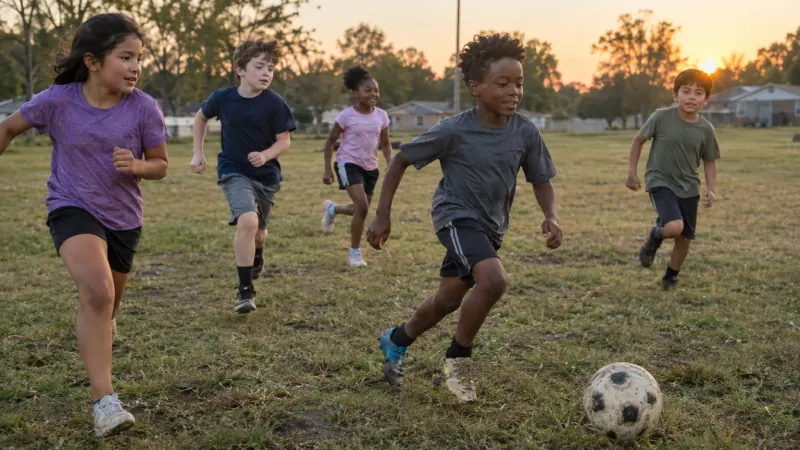
Listen to a Friday night in a small Southern town. You can hear it before you see it: a whistle, a shout, a parent clapping from the bleachers. Children are running, falling, getting up, and laughing. It looks like a game. It is also an education.
Now think about the child who is not on that field. Not because they do not love the game, but because the fees, the cleats, and the rides were out of reach. That child is missing more than a sport.
Key takeaways
- Sports support children's health, confidence, and friendships.
- Team play teaches skills that carry over to school and adult life.
- Cost, transportation, and equipment keep many children on the sidelines.
- Community support can put a child on the field at a small cost.
- Giving to youth sports is giving to the whole child.
What sports give a child
Physical activity is one of the building blocks of healthy growth. Federal guidance in the Physical Activity Guidelines for Americans recommends regular daily activity for children and teens. The CDC also explains the many benefits of being active, including stronger bones and muscles and better mood.
But the benefits do not stop at the body. Team sports teach children things no textbook can:
- Teamwork. Children learn that they win and lose together.
- Discipline. Showing up for practice is a habit that carries into school and work.
- Resilience. Losing a game and trying again builds grit.
- Respect. Following rules and respecting coaches and opponents is a lesson in character.
- Belonging. A team is a group that notices when you are missing.
For some children, the team is the safest, steadiest place in their week.
How sports connect to school and home
A child who feels part of something is often more engaged in everything else. A coach can become a trusted adult. Teammates can become friends. A game can give a child something to look forward to.
For a child who is dealing with hardship, that can matter a lot. A child whose family is stretched thin may not get many chances to feel like a star. On the field, they can. A good play is a good play, no matter what the family can afford.
These links between activity, stability, and learning are part of why Plondo Foundation includes Sports & Community among its four programs. You can read more on the programs page.
The hidden costs of playing
Youth sports look simple, but they can add up. A child may need:
- Registration or league fees.
- Cleats, shoes, or special gear.
- Uniforms.
- A ride to practice and games.
- A water bottle and healthy snacks.
- Time off for parents, who may be working.
For a family already choosing between groceries and bills, those costs can be the thing that gets cut first. The child does not say it is about money. The child says they are not interested anymore.
The Annie E. Casey Foundation's KIDS COUNT Data Center tracks child well-being indicators across states, including measures of family economic strain. The U.S. Census Bureau reports on poverty. These sources help us understand how many families face tight budgets.
Why it matters most for children facing hardship
Children who are hungry, or whose homes are unstable, often need places of safety and joy more than anyone. Sports can be one of those places. They give structure, adult attention, and a healthy way to burn off stress.
Of course, sports are not a replacement for food, housing, or school support. They work best alongside them. That is why we talk about the whole child. Our article on child hunger in Louisiana describes why basic needs come first, and our piece on why stable housing matters for learning shows how home affects everything else.
When the basics are covered, play helps a child grow into themselves.
How communities can help
A community can do a lot for a child's place on the team. Ideas include:
- Sponsor a child's season. A gift can cover fees or equipment.
- Donate gently used gear. Cleats, gloves, and balls can find new life.
- Volunteer. Coaches, scorekeepers, and drivers are always needed.
- Offer rides. A carpool can make practice possible.
- Give monthly. Steady support lets programs plan for the season.
If you are weighing time versus money, you are not alone. Our article on volunteering versus donating offers a way to think it through. And for ideas on getting your own family involved, see teaching kids to be generous.
Local teams, local pride
In many towns, sports are woven into community life. People know the coaches. They know the fields. They remember who played in which season. That closeness can be a strength for helping children.
When a community decides every child belongs on the field, something shifts. Kids from different neighborhoods meet. Parents sit together in the stands. A town looks after its own. We explore that spirit more in giving in Monroe and northeast Louisiana.
What a gift to Sports & Community does
Plondo Foundation's Sports & Community program supports youth sports. A gift to the program helps children take part in team play that they might otherwise miss. You can find the full description at Sports & Community.
Gifts help in different ways. A gift of $25 can help provide food and clean water for a child, while a gift of $100 can help with school supplies and a gift of $250 can support living expenses. When you give, you can choose to help in the way that fits your heart. Giving to any of the programs supports the same mission: that every child in northeast Louisiana and beyond has shelter, food, water, and the education and support to thrive.
What a good coach gives a child
A good coach does more than teach a sport. A coach notices when a child is quiet. A coach says, "good effort," and means it. A coach shows a child how to lose well and win kindly.
For many children, a coach is one of the first adults outside the family who believes in them. That belief can carry a child through hard months at school or at home.
If you ever wondered whether volunteering as a coach matters, it does. So does giving that lets a program pay for fields, balls, and fees. The adults behind the scenes help make every game possible. Children remember them for the rest of their lives.
What parents can do on game day
Parents shape the sports experience for every child. Cheer for effort, not only for wins. Thank the coach and the volunteers. Offer a ride to a teammate who needs one. Share a snack so that no child sits out hungry.
Small acts like these make a team feel like a family, and they help every child feel that they belong.
Put a child on the team
Think back to your own favorite game, your favorite coach, or the time your team won. Then picture a child who has never had that. You can help change that.
Visit /donate to give once or set up a monthly gift. Monthly gifts are especially helpful, because a season of play needs steady support. Your gift is tax deductible, and your receipt arrives by email. If you have questions, see the FAQ or write to foundation@plondo.com.
The whistle is about to blow. Help every child get on the field.
Frequently asked questions
How does youth sports help child development?
Sports support physical health, and they also teach teamwork, discipline, and resilience. Children learn to win and lose, follow rules, and encourage others. Being part of a team can build confidence and a sense of belonging, which supports children in school and at home as well.
How much physical activity do children need?
U.S. health guidelines recommend that school-age children and teens get regular daily physical activity, most of it moderate to vigorous. Team sports are one fun way to reach that goal. See the federal Physical Activity Guidelines on health.gov for the current recommendation.
How can I help a child take part in sports?
You can give to a charity that supports youth sports, volunteer as a coach or helper, or sponsor a child's season. At Plondo Foundation, the Sports & Community program supports youth sports in the community. A donation at /donate helps keep kids on the field.